Driveways and Parking for South Devon Holiday Lets: Costs, Rules and What Guests Need
Search any holiday let booking site for a South Devon cottage and one of the first filters most guests apply is parking. It is not a nice-to-have in this part of the world, it is close to a dealbreaker - a large majority of visitors to South Devon arrive by car, because the alternative in a region with limited rural public transport is basically nothing. Listings with confirmed off-road parking consistently attract higher occupancy and command a premium over otherwise identical properties without it, and owners who have added parking commonly report a 10 - 20% uplift in achievable nightly rate. Meanwhile Brixham, Dartmouth, Totnes and Newton Abbot all have genuine on-street parking pressure through the summer, and a guest who spends forty minutes circling on arrival writes that into the review. Here is what parking actually costs to build and what it needs to do.
What Holiday Let Guests Actually Need From a Driveway
It is a different specification from a private driveway, and the differences matter.
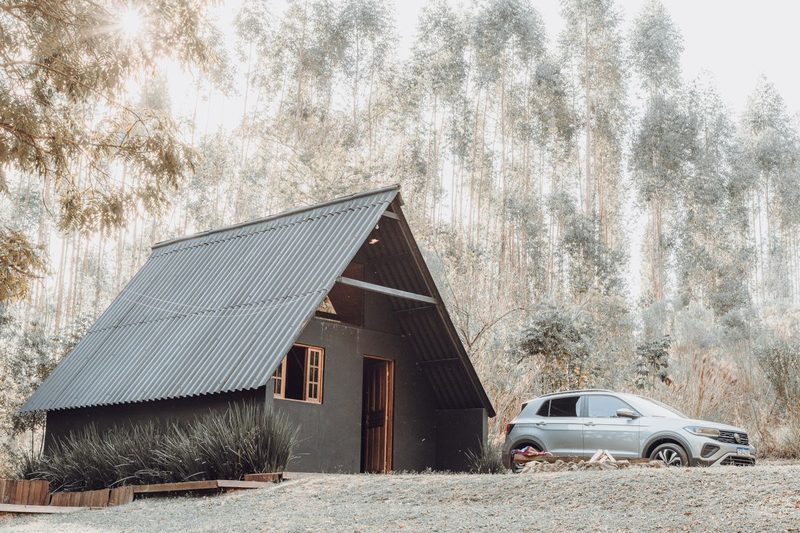
Two cars, not one. A very large share of South Devon holiday bookings are two couples or a family with an adult child, and both parties drive. A single-car driveway with a listing that says "parking for one" is filtered out by a meaningful slice of the market. Two spaces is the practical minimum for anything sleeping four or more, and it changes the width requirement substantially - a comfortable side-by-side two-car bay needs around 4.8 - 5.4 metres of width, against 2.7 - 3 metres for a single.
Unfamiliar drivers. Your guests have never driven this entrance before, they are usually towing nothing but arriving tired after four hours on the A38, and often in a hire car or an unfamiliar vehicle. A tight entrance that you swing into without thinking is a scraped alloy and an awkward conversation for someone who has never seen it. Entrance width matters more on a holiday let than on a private home - 3 metres minimum at the threshold, and more where the approach is at an angle.
Surface and luggage. Guests arrive with cases, buggies, wetsuit bags and often a dog. Gravel is popular with owners because it is cheap and it drains, and it is quietly disliked by guests because suitcase wheels do not work on it. A bound or paved surface between the parking bay and the door is worth more to a review score than the parking itself. If you are planning a build around a holiday let rather than a private home, it is worth saying so at the quote stage - West County Driveways will spec it differently once they know it is a rental.
EV Charging Is Becoming a Filter of Its Own
Electric vehicle share of new UK car registrations has climbed past a quarter, and hire fleets are electrifying faster than the private market. Holiday lets with an EV charge point are already being filtered for on the major platforms. A 7kW charge point installed alongside a new driveway costs £800 - £1,400 in South Devon, and dramatically less if the ducting goes in while the driveway is being excavated rather than being retrofitted afterwards - retrofit means cutting the surface you just paid for. If there is any chance you will want one within five years, run a 32A armoured cable and a duct now. It is £150 - £300 of materials against £600 - £1,200 of remedial work later.
What It Costs to Build in South Devon
Prices are quoted per square metre and vary with excavation depth, drainage and access. For a driveway built to take two cars, roughly 30 - 40m²:
- Tarmac: £55 - £85 per m², so £1,900 - £3,400 for a two-car driveway
- Block paving: £75 - £120 per m², or £2,600 - £4,800
- Resin bound over a new tarmac base: £95 - £150 per m², or £3,300 - £6,000
- Gravel over a membrane and edging: £35 - £60 per m², or £1,200 - £2,400
- Cellular gravel grid, stabilised: £55 - £90 per m², or £1,900 - £3,600
Add £400 - £1,200 for a dropped kerb where one is needed, £600 - £2,500 for significant excavation on a sloped site, and £500 - £1,500 for drainage where a soakaway is required.
On the economics: if a driveway lifts your achievable nightly rate by £15 and you let for 25 weeks a year, that is roughly £2,600 of additional annual revenue before any occupancy improvement. Most of these builds pay back inside two seasons, which is unusual for hard landscaping.
Which Surface for a Rental
Gravel is the cheapest and it is the one most owners regret. It migrates, guests kick it onto the lawn, it needs topping up every couple of years, and suitcase wheels sink in it. A stabilised cellular gravel grid solves most of that for a modest uplift and is genuinely worth the difference on a let.
Tarmac is the best value durable option and copes well with the freeze-thaw South Devon barely gets. Block paving looks better in listing photographs, which is not a trivial consideration when the photograph is doing the selling, and individual blocks can be lifted and relaid if anything settles. Resin bound photographs best of all and drains well, which matters here, but it is the most expensive and the least forgiving of a poorly prepared base.
Sloped Sites, Which Is Most of South Devon
Flat building plots are the exception rather than the rule between Totnes, Brixham and Dartmouth, and slope drives both the cost and the design.
Gradient is the first constraint. A parking bay itself should not exceed about 1:20 in the direction a car is parked, both so vehicles do not roll and so that opening a door on a slope is not a struggle for older guests. An access ramp can be steeper, up to around 1:10 comfortably and 1:8 at a push, but anything above that risks grounding on a low-slung car - and your guest's hire car is exactly the vehicle most likely to ground.
Levelling a sloped site means either cut-and-fill or retaining structures. A retaining wall of any meaningful height adds cost quickly: £250 - £450 per linear metre for a 600mm sleeper or block wall, and £450 - £900 per metre once you are above a metre and into engineered retaining with proper drainage behind it. Anything over 1.2 metres high or supporting a highway generally needs structural design and Building Regulations involvement.
Drainage on a slope is the thing that gets underestimated. Water arriving from above the driveway has to be intercepted before it reaches the parking area, usually with a channel drain across the top of the run, or it will sheet across the surface and ice up on the rare cold morning. On South Devon's steeper sites a top-of-run channel drain is not an optional extra.
Coastal Exposure at Brixham, Dartmouth and Teignmouth
Properties within a few hundred metres of the water get salt-laden air, and it affects material choice. Steel edging corrodes, unprotected ironwork in gully gratings rusts, and mortar joints weather faster. Specify galvanised or composite edging, plastic or composite gully covers rather than cast iron where you can, and a slightly richer mortar mix on any bedded work. It is a small premium at build stage and it saves a repair five years in.
Planning Permission, Dropped Kerbs and Drainage Rules
Three regulatory points, and the first catches out more owners than the other two combined.
Paving a front garden with an impermeable surface exceeding 5 square metres, where the water drains to the highway, requires planning permission. Use a permeable surface - permeable block paving, permeable resin, gravel, or a cellular grid - or direct the run-off to a soakaway or permeable area within your own boundary, and it falls under permitted development. This is a national rule and the Planning Portal's guidance on paving front gardens sets out the detail. For a holiday let, permeable is usually the right answer anyway, because it avoids the application, the delay and the fee.
A dropped kerb is a separate consent from the highway authority, not the planning authority, and it is needed for any new vehicle crossing over a footway. In the Teignbridge and Torbay areas this goes through the relevant highway authority and typically takes 6 - 12 weeks from application to works, with costs commonly £800 - £2,000 including the works themselves. Apply early - it is the longest lead time in the whole project. Teignbridge District Council and Torbay Council publish local guidance for their areas.
Third, if your property is in a conservation area - which covers parts of Dartmouth, Totnes and Ashburton - or is listed, altering a boundary wall to form an access can need separate consent even where the driveway itself does not. Removing a section of historic wall without consent is an offence and an expensive one to remedy.
Business Rates and Holiday Let Status
Worth knowing if the property is a commercial let: self-catering accommodation that meets the letting thresholds is assessed for business rates rather than council tax, and improvements to the property can affect the rateable value. GOV.UK's guidance on self-catering and holiday let accommodation explains the qualifying criteria. It rarely changes the decision, but it is better known about in advance than discovered later.
Building It Around a Letting Calendar
The practical constraint most owners forget is that you cannot take the property offline in August.
Driveway work needs 3 - 10 days depending on surface and whether there is excavation or retaining involved, plus curing time. Resin bound needs dry conditions and surface temperatures above about 5°C, and tarmac lays better warm. That points at a window roughly from late September to early November, or March into April - after the main season and before Easter.
South Devon's climate helps at the margins. The region averages around 900 - 1,000mm of rainfall a year across roughly 150 wet days, with a mild winter - January means of 5 - 7°C and relatively few air frosts, well under the UK average. That mildness means the working season for driveway installation runs longer here than in most of the country. The limiting factor is rain rather than cold, and October is one of the wetter months, so early October is better than late.
Book well ahead. Driveway contractors across South Devon are busiest from March to September and the good ones are booked 4 - 8 weeks out through the season, which compresses the autumn window considerably. If you are aiming at a shoulder-season build, enquiring in July is not premature. We have gone into the seasonal and site factors in more detail in our guide to driveway costs in Paignton across tarmac, resin and block paving, which covers the slope and access issues common across Torbay.
Frequently Asked Questions
How much does a two-car driveway cost for a South Devon holiday let? Between roughly £1,200 and £6,000 for a 30 - 40m² area depending on surface. Gravel is £1,200 - £2,400, a stabilised cellular gravel grid £1,900 - £3,600, tarmac £1,900 - £3,400, block paving £2,600 - £4,800 and resin bound £3,300 - £6,000. Add £400 - £1,200 for a dropped kerb, £600 - £2,500 for excavation on a sloped site, and £500 - £1,500 for drainage or a soakaway.

Do I need planning permission for a holiday let driveway? Only if you are laying an impermeable surface over 5 square metres in a front garden that drains to the highway. Use permeable block paving, permeable resin, gravel or a cellular grid, or direct run-off to a soakaway within your boundary, and it falls under permitted development. A dropped kerb is a separate consent from the highway authority and typically takes 6 - 12 weeks, so apply for that first.
Which driveway surface is best for a holiday rental? Block paving or resin bound if listing photographs matter to you, tarmac for best value durability, and a stabilised cellular gravel grid if budget is the constraint. Plain loose gravel is the one most owners regret - it migrates, needs topping up, and suitcase wheels do not roll on it. Whatever the surface, make sure there is a firm, level, bound route from the parking bay to the front door.
Is it worth adding parking to a holiday let? Usually yes, and it pays back faster than most property improvements. Off-road parking is one of the most-applied filters on booking platforms, and owners commonly see a 10 - 20% uplift in achievable nightly rate. At £15 extra per night across a 25-week letting season that is around £2,600 of additional annual revenue before any occupancy gain, so most builds return their cost within two seasons.
When should the work be done around a letting season? Late September to early November, or March into April. The job takes 3 - 10 days plus curing, and resin bound needs dry conditions above about 5°C. South Devon's mild winters, with January means of 5 - 7°C and few air frosts, give a longer working season than most of the UK - rain is the constraint rather than cold, so early October beats late October. Book 4 - 8 weeks ahead, and enquire in summer for an autumn slot.
You might also like
West County Driveways