Tarmac Driveway Repairs and Resurfacing in Newton Abbot: Costs and Options
Most tarmac driveways in Newton Abbot don't fail all at once - they fade, crack at the edges, and pothole gradually over 15-25 years until one wet winter finishes the job. South Devon's roughly 1,000mm of annual rainfall is the main culprit: water gets into hairline cracks, the clay subsoil beneath swells and shrinks, and small defects become big ones fast. The good news is that a tired tarmac driveway rarely needs ripping out. Localised repairs start from around £100-£300, a resurfacing overlay on a sound base typically runs £30-£45 per m² against £45-£65 per m² for a full new installation, and a proper relay with fresh sub-base sits at £2,500-£4,800 for a typical 20-40m² drive. This guide covers which option fits which problem, what each costs in Newton Abbot in 2026, and how to avoid paying twice.
How Tarmac Driveways Fail in Newton Abbot
Tarmac driveway repairs in Newton Abbot follow a fairly predictable pattern, because the failure causes are local and consistent. The town sits in the Teign Valley with clay-heavy subsoils across much of the lower ground, and clay moves. In a wet Devon winter it swells; in a dry spell it shrinks. A driveway laid on a thin or poorly compacted sub-base flexes with that movement, and tarmac only tolerates so much flexing before it cracks.

Water does the rest. With around 1,000mm of rain a year - comfortably above the UK average of roughly 885mm - Newton Abbot driveways spend a lot of the year wet. Water sitting in cracks softens the base beneath, and each freeze (South Devon averages 20-30 air frost days a year, mild by UK standards but enough) expands those cracks a little more. Edges crumble first where there's no restraint, then potholes open up in the wheel tracks.
If your driveway is showing early signs - fading, fine surface cracks, crumbling margins - acting within a year or two usually means a repair or overlay is still on the table. West County Driveways assesses tarmac driveways across Newton Abbot and the surrounding Teignbridge area, and an honest site visit is the fastest way to find out which category yours falls into.
Repair, Resurface, or Relay: Which One Do You Actually Need?
There are really only three options, and the right one depends on the base, not the surface.
Localised repairs - £100 to £600
Patching suits a driveway that's structurally sound with one or two specific defects: a pothole, a utility trench that's sunk, cracking in one corner. A single pothole repair typically costs £100-£300, and a day of patching work around £400-£600. Patches never match the surrounding tarmac perfectly - expect a visible repair - but done properly they stop water getting in, which is the point.
Resurfacing overlay - £30 to £45 per m²
An overlay means laying a new wearing course (usually 25-30mm) over the existing tarmac. It's the sweet spot for driveways where the base is sound but the surface is tired: a 30m² Newton Abbot drive resurfaced for £900-£1,350 instead of £1,800-£3,500 for a full new install. The catch is that an overlay is only as good as what's underneath. Overlay a cracked, moving base and the cracks telegraph through the new surface within 2-3 years.
Full relay - £2,500 to £4,800 for 20-40m²
If the driveway has widespread cracking, rutting, or ponding, the base has failed and the honest answer is excavation, a new 150-200mm compacted Type 1 sub-base, and two-coat tarmac from scratch. It costs roughly double an overlay, but on Newton Abbot's clay ground it's the only fix that lasts when movement is the underlying problem.
Tarmac Repair and Resurfacing Costs in Newton Abbot for 2026
Here's how the numbers stack up for a typical Newton Abbot property in 2026:
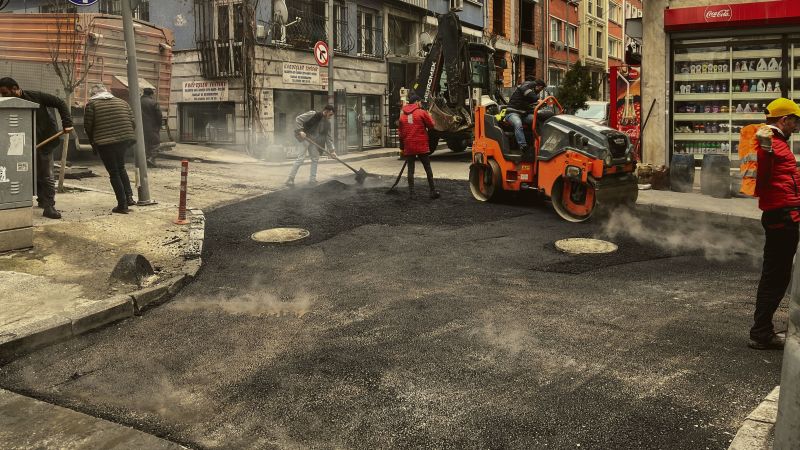
- Single pothole repair: £100 - £300
- Crack filling and edge repairs (half day to full day): £250 - £600
- Resurfacing overlay, 20-40m² drive, sound base: £700 - £1,800 (£30-£45 per m²)
- Resurfacing overlay, 40-60m²: £1,400 - £2,700
- Full relay with new sub-base, 20-40m²: £2,500 - £4,800
- Full relay, 40-60m²: £4,000 - £7,000
- New kerb or block edging (per linear metre): £30 - £60
Two things push Newton Abbot quotes toward the top of these ranges. First, access: the Victorian streets around the town centre are tight for a tipper and roller, and hand-barrowing material adds labour time. Second, slopes: properties on the rising ground toward the Dartmoor edge, and on the hillier plots out toward Ogwell, often need extra edge restraint and drainage work to stop the new surface eroding at the bottom of the fall.
Get at least two or three quotes and make sure each one states the same scope - overlay versus relay, sub-base depth, edging, drainage. A £900 overlay quote and a £3,500 relay quote aren't competing prices; they're different jobs.
When an Overlay Is a False Economy
Roughly a third of the tarmac driveways we're asked to resurface shouldn't be overlaid at all, and it's worth knowing the warning signs before an installer who wants a quick job tells you otherwise.
Alligator cracking - interconnected cracks forming a scale pattern - means the base is flexing. Ruts deeper than about 20mm in the wheel tracks mean the base has compressed or the original tarmac was under-specified. Standing water that takes more than an hour to clear after rain points to a drainage or level problem an overlay will inherit. And if the existing surface is already two layers deep from a previous overlay, adding a third raises the level enough to cause damp-course and door-threshold problems.
An overlay over a failing base typically lasts 2-5 years before the old cracks reappear. A relay lasts 20-30. Paying £1,200 twice in a decade is worse than paying £3,500 once, and on Newton Abbot's clay this maths comes up a lot.
The one-third rule
A useful rule of thumb: if more than a third of the surface area needs patching before it can be overlaid, the patching cost erodes the overlay saving to the point where a relay is better value. Most reputable installers will tell you this at the quote stage. If yours doesn't mention the base at all, that's the red flag.
Drainage Rules and Planning in Teignbridge
Resurfacing is usually straightforward from a planning point of view, but it's worth knowing where the lines are. Tarmac is impermeable, and under national rules any new or replacement impermeable surface over 5m² in a front garden must drain to a permeable area or soakaway rather than the highway - otherwise planning permission from Teignbridge District Council is required. The Planning Portal's guidance on paving your front garden sets out the requirements clearly.

A like-for-like overlay on an existing driveway generally doesn't trigger the rule, but a relay is a sensible moment to sort drainage properly anyway. A channel drain across the entrance costs £300-£600 installed and stops the classic Newton Abbot problem of runoff sheeting across the pavement in heavy rain - which, with 130-plus rain days a year here, is not a theoretical concern.
On sloped sites, drainage does double duty. Water running down a fall concentrates at the bottom edge, and that's exactly where tarmac driveways on the hillier plots around town fail first. A drain at the low point protects the new surface as much as it satisfies the regulations.
Choosing an Installer in Newton Abbot
South Devon has a healthy supply of surfacing contractors - Newton Abbot sits at the junction of the A38 and A380, so crews serving the whole Torbay-to-Plymouth corridor pass through daily, and getting three quotes within a week or two is realistic for most of the year. Spring and early summer are the busy season; some installers offer keener pricing for autumn bookings, though tarmac needs dry conditions to lay well, which narrows the window in a Devon autumn.
The flip side of good supply is that driveway work attracts more than its share of rogue traders, and resurfacing - being cheaper and quicker than a full install - is a favourite for cold-callers offering "leftover tarmac" at a too-good price. Leftover tarmac cools and becomes unworkable within hours, so the story rarely holds up. Checking a contractor holds TrustMark government-endorsed registration is a quick filter, and Which? offers sensible guidance on hiring a driveway contractor if you want a structured checklist.
Ask every quoting installer three questions: is this an overlay or a relay, what depth of new material am I getting, and what happens to drainage? Vague answers to any of those are your cue to move on.
How Long a Repaired or Resurfaced Driveway Lasts
Set expectations by the work done, not the invoice total. A patch repair buys 3-5 years on the repaired spot and stops the rot spreading. A resurfacing overlay on a genuinely sound base should give 12-15 years - a bit less than the 20-30 years of a full two-coat installation, because the old base is already partway through its life. A full relay resets the clock entirely: 20-30 years is a fair expectation on a proper 150-200mm sub-base, even on Newton Abbot's clay.
Maintenance stretches all of these numbers. Seal cracks as they appear (a £20 tube of crack filler in year eight beats a £300 pothole repair in year ten), keep moss off shaded sections - a real issue in Devon's damp air - and don't let hedge or tree roots run under the edges. Driveways on the newer estates out toward Kingskerswell tend to age better than the older town-centre drives simply because they started with modern sub-base specs; if yours dates from before the 1990s, budget expectations toward the relay end.
The honest summary: repairs and overlays are excellent value when the base is sound, and money down the drain when it isn't. Get the base assessed first, then decide.
We've broken down full installation pricing in more detail in our Newton Abbot tarmac driveway cost guide for 2026, which is worth a read if the quotes you're getting point toward a relay rather than a repair.
---
FAQ
Q: How much does it cost to resurface a tarmac driveway in Newton Abbot?
A: A resurfacing overlay costs £30-£45 per m², so a typical 20-40m² Newton Abbot driveway runs £700-£1,800 - roughly half the cost of a full relay. The base must be structurally sound; overlaying a failed base means the cracks return within 2-5 years.
Q: Can you repair potholes in a tarmac driveway rather than resurfacing?
A: Yes. A single pothole repair costs £100-£300 and a day of patching work £400-£600. Patching suits driveways that are sound overall with isolated defects. If more than about a third of the surface needs patching, a resurfacing overlay or full relay is better value.
Q: How do I know if my tarmac driveway needs a full relay instead of an overlay?
A: Alligator cracking (interconnected scale-pattern cracks), ruts over 20mm deep, and standing water that won't clear all point to a failed base. On Newton Abbot's clay subsoils these are common, and an overlay over a moving base fails within a few years. A full relay with a new 150-200mm sub-base costs £2,500-£4,800 for 20-40m² and lasts 20-30 years.
Q: Do I need planning permission to resurface my driveway in Newton Abbot?
A: A like-for-like resurface generally doesn't need permission. New or replacement impermeable surfacing over 5m² in a front garden must drain to a permeable area or soakaway rather than the highway, otherwise planning permission from Teignbridge District Council is required. A £300-£600 channel drain usually satisfies the drainage rule.
Q: How long does a resurfaced tarmac driveway last?
A: An overlay on a sound base should last 12-15 years in Newton Abbot conditions. A full relay lasts 20-30 years. Sealing cracks early and keeping moss off shaded areas - important given South Devon's roughly 1,000mm of annual rain - extends both.
---
You might also like
West County Driveways