Sloped Driveways in Totnes: Which Surface Handles a Slope Best?
Totnes sits on a hill, and a fair number of the driveways we quote for reflect that: properties with a noticeable gradient from the road up to the house, or driveways that slope away toward a garage at the back of the plot. A slope changes the calculation for which surface works best, because the things that matter on a flat driveway, drainage, grip, durability, all behave differently once gravity's involved.
Grip and Surface Texture Matter More on a Slope
If you're not sure how steep is "too steep" for a particular surface, West County Driveways can assess the gradient on-site and talk through which options are realistic for the specific slope.
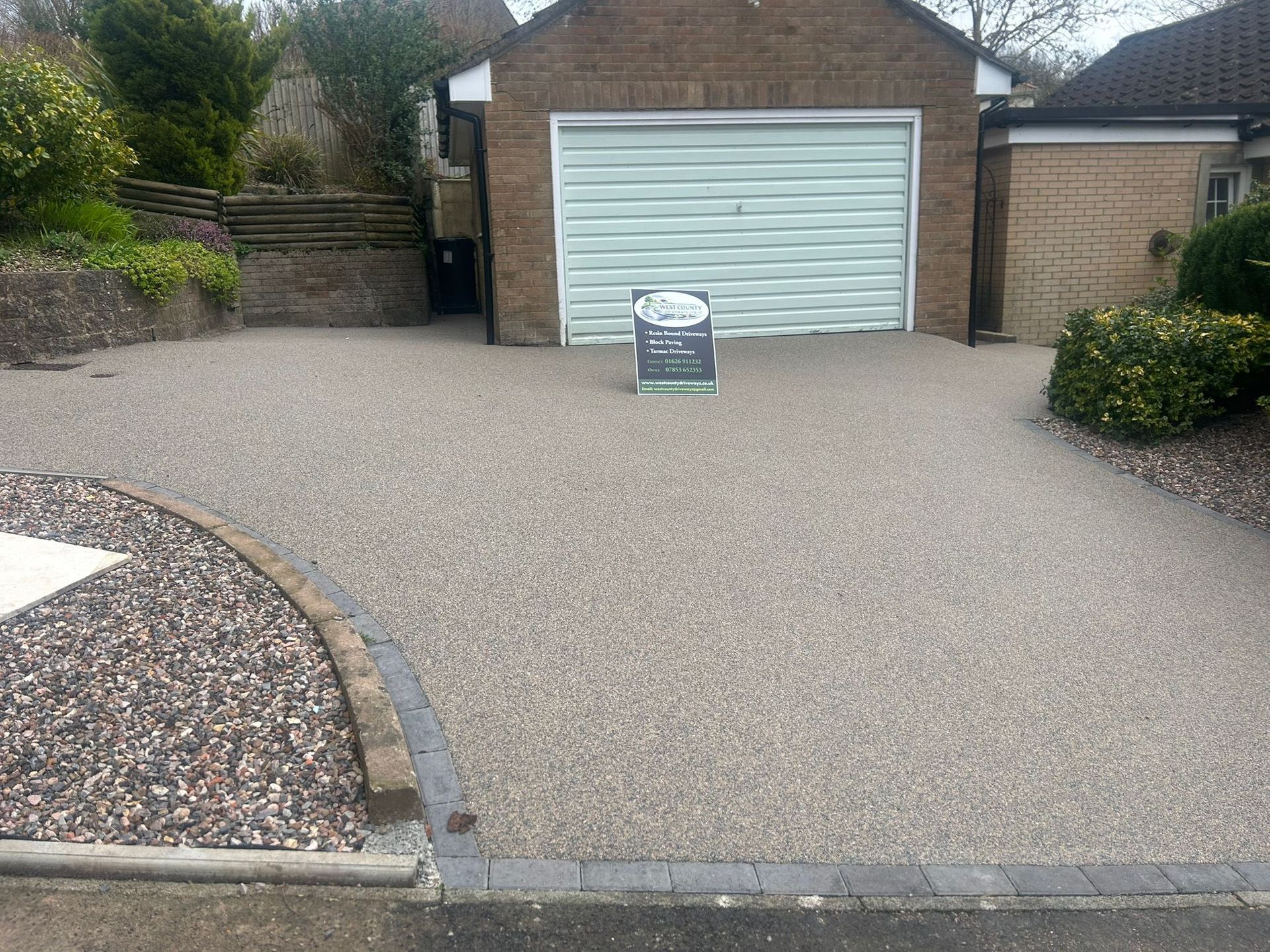
On a flat driveway, a smooth resin or tarmac finish is fine underfoot in all weather. On a slope, especially anything steeper than around 1:10 (roughly a 10% gradient), a smooth surface that's slightly wet or frosty becomes noticeably more slippery, both for cars braking and for anyone walking up to the front door. Resin-bound surfacing, which has a naturally textured, slightly gritty finish from the aggregate mix, tends to perform better here than smooth tarmac or polished block paving, and some installers can specify a coarser aggregate mix specifically for sloped sections to improve grip further.
Block Paving on a Slope Needs Extra Attention to Laying Pattern
Block paving can work well on a slope, but the laying pattern matters more than it does on flat ground. A herringbone pattern, where blocks interlock at 45 degrees, resists the tendency of blocks to creep downhill under repeated vehicle weight far better than a simple stretcher-bond pattern laid in straight rows. On steeper drives, edge restraints (the kerbing or edging that holds the blocks in place) need to be more robust too, since they're resisting a constant downhill force rather than just holding blocks in a static position.
Drainage on a Slope Works Differently
Water on a flat driveway tends to sit where it falls unless there's a deliberate fall built in toward a drain. On a sloped driveway, water naturally runs to the bottom, which sounds like it solves the drainage problem but often just relocates it: the bottom of a sloped driveway, particularly where it meets a garage, road, or boundary, can end up dealing with the combined run-off from the whole slope above it.
We've compared driveway surfaces for cost in Torquay, and on a sloped site specifically, permeable resin-bound surfacing has a real advantage here: rainwater drains through the surface into the sub-base across the whole slope, rather than concentrating into a single channel at the bottom. With tarmac or non-permeable block paving on a slope, a channel drain at the lowest point becomes much more important, and needs to be sized for the volume of water coming down the whole driveway, not just what falls on that one section.
Tarmac on Steep Drives
Tarmac is a perfectly reasonable choice for a sloped driveway and is widely used on steep drives across Devon, but it benefits from a slightly different surface finish on steep sections, sometimes a more textured "open" surface dressing rather than the smoother finish used on flatter areas, again for grip. Tarmac is also more forgiving than block paving when it comes to a slope changing gradient partway down, since it's laid as a continuous surface rather than individual units that need to follow the gradient change at a joint.
What This Means for Cost
Sloped driveways generally cost somewhat more than flat ones for the same surface area, mainly because of the extra groundwork: cutting into a slope to create a more even base, or building up retaining edges, takes more time and sometimes more materials than preparing a flat sub-base. The drainage considerations above can also add cost if a channel drain or soakaway needs installing at the base of the slope where there wasn't one before.
Getting It Right From the Start
A driveway that's been resurfaced without properly addressing the slope, just laying a new surface over the old gradient without adjusting drainage or grip, often shows the same problems within a year or two: water pooling at the bottom, or a surface that's noticeably more slippery than expected in winter. Getting the groundwork and surface choice right for the specific gradient at the outset avoids having to address these issues after the fact.
FAQ
Q: Does a sloped driveway need a different surface to a flat one? A: Not necessarily a different surface entirely, but grip and drainage matter more. Textured resin-bound surfacing or a more open-textured tarmac finish often performs better on slopes than smooth finishes.
Q: Is block paving suitable for a sloped driveway? A: Yes, but the laying pattern matters. Herringbone patterns resist blocks creeping downhill under vehicle weight better than straight stretcher-bond patterns, and edge restraints need to be more robust.
Q: Why does drainage need extra thought on a sloped driveway? A: Water naturally runs to the bottom of the slope, which can concentrate run-off from the whole driveway into one area. Permeable surfacing like resin-bound spreads drainage across the slope rather than relying on a single drain at the base.
Q: Does a sloped driveway cost more than a flat one? A: Generally yes, mainly due to extra groundwork like cutting into the slope for a level base or building retaining edges, and potential drainage work like adding a channel drain at the bottom.
You might also like
West County Driveways