Tarmac vs Block Paving Driveways in Newton Abbot: Costs, Looks, and Which Wins
Tarmac and block paving are the two surfaces Newton Abbot homeowners weigh up most often once resin is off the table. They sit at different ends of the budget, they look nothing alike, and they age in completely different ways. Tarmac usually costs £45-£65 per square metre installed, while block paving runs £60-£100 per square metre, so on a typical 40m² drive you could be looking at a £1,000-£1,500 gap before groundwork is even factored in. Both handle Devon's roughly 1,000mm of annual rainfall well when they're laid properly, and both can last 20 years or more. But the right answer depends on your budget, your frontage, and how much upkeep you're willing to do. Here's an honest side-by-side to help you decide.
The Cost Gap Between Tarmac and Block Paving in Newton Abbot
Price is where the two surfaces separate most clearly. Tarmac is the cheaper option almost every time, and the reason is labour. A two-coat tarmac drive is laid and rolled in a day or two, whereas block paving is set by hand, block by block, over the best part of a week for a larger drive.
In 2026 terms, a standard Newton Abbot tarmac driveway of 20-40m² on a sound base sits around £1,800-£3,500. The same footprint in block paving typically lands at £3,000-£5,500, and premium blocks or intricate patterns push it higher still. Across a larger 50m² frontage the difference can easily top £2,000. If you want the full breakdown on the tarmac side, our tarmac driveway cost guide for Newton Abbot walks through every line item.
That said, cheaper upfront doesn't always mean cheaper over 20 years. Block paving can be lifted and relaid in sections, which changes the long-term maths in ways we'll come to. Whichever way you lean, it's worth getting a proper site visit from West County Driveways rather than a rough phone figure, because ground conditions in Newton Abbot vary street to street.
How They Look: Kerb Appeal in a Devon Market Town
This is the most personal part of the decision. Tarmac is functional and clean, but it's essentially black. Coloured tarmac and a red-tinted finish exist, though they add roughly 15-25% to the cost and still read as a flat, single-tone surface.
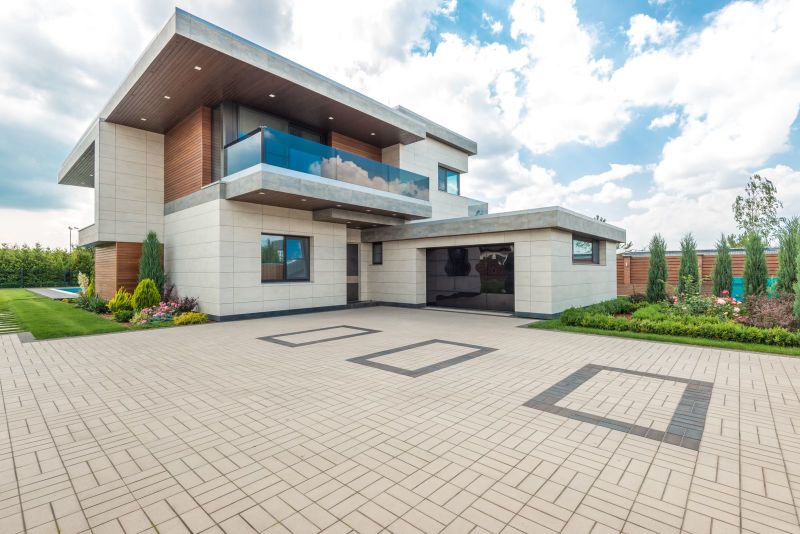
Block paving is where the visual interest lives. You get a genuine choice of colours, block shapes, and laying patterns - herringbone, stretcher bond, basketweave - plus contrasting borders and edging courses. For Newton Abbot's mix of Victorian and Edwardian semis around the town centre, and the newer estates out toward Kingsteignton, block paving often suits the character of a period frontage better and lifts the look of a plainer modern house.
If your priority is a smart, individual finish that adds to the property's kerb appeal, block paving usually wins on looks alone. If you just want a tidy, all-weather surface and would rather spend the difference elsewhere, tarmac does the job without fuss.
Coping With South Devon's Rain and Drainage Rules
Newton Abbot sits in the Teign Valley, and it is genuinely wet - around 1,000mm of rain a year, well above the drier eastern counties. Both surfaces cope, but they manage water differently, and this affects planning too.
Standard tarmac and standard block paving are both impermeable, so surface water has to go somewhere. Under current rules, any front-garden driveway over 5m² using an impermeable surface needs either permission from Teignbridge District Council or a drainage solution that keeps runoff off the public highway. The government's guidance on the permeable surfacing of front gardens and the Planning Portal's advice on paving your front garden both explain this well, and it applies equally to tarmac and block.
The difference is that block paving has a permeable version - permeable block paving with wider joints and an open sub-base - that lets water soak through and sidesteps the planning requirement entirely. That flexibility is a real point in block paving's favour on a wet Newton Abbot frontage. Tarmac's usual answer is a channel drain, typically £300-£600, directing water to a soakaway or border.
Dealing With Slopes and Clay Subsoils
Ground conditions near the Dartmoor edge are demanding. Many Newton Abbot plots sit on sloping sites, and the lower parts of town carry clay-heavy subsoils that swell and shrink as they wet and dry through the year.
On a slope, tarmac has an edge for a smooth, continuous run - it's laid as one monolithic surface with no joints to shift. Block paving on a steep drive needs firm edge restraints and careful base work, or blocks can creep downhill over the years. On the flat, both are fine.
Clay is the great leveller. Both surfaces live or die on the sub-base beneath them. The correct spec in Newton Abbot's clay areas is 150-200mm of compacted MOT Type 1, and skimping here is the single biggest cause of early failure for either surface. A cheap quote that trims the base is a false economy on both tarmac and block.
Maintenance and Repairs Over 20 Years
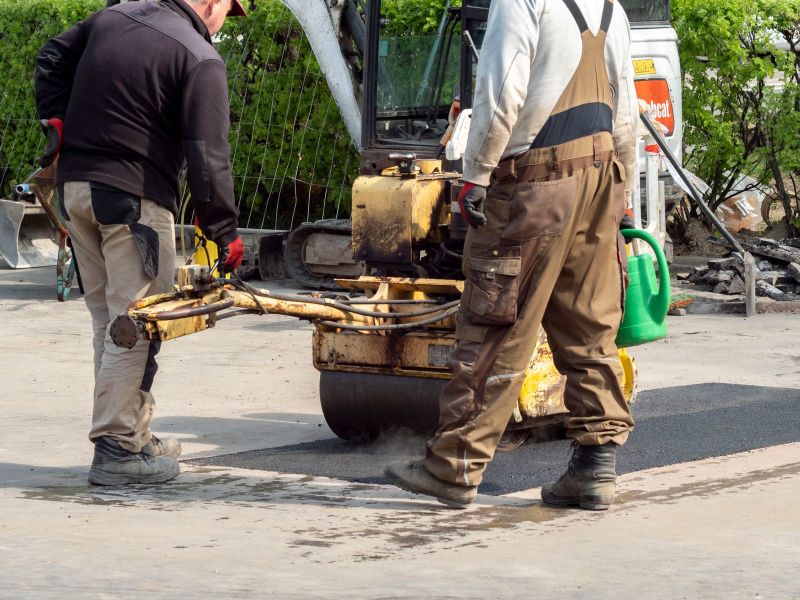
Here the surfaces genuinely swap advantages. Tarmac is close to zero-effort day to day - the odd wash, maybe a resealing coat every few years to keep it black. But when tarmac cracks or sinks, the repair is a patch that rarely blends invisibly, and a full resurface eventually becomes the honest answer.
Block paving asks for a bit more attention: occasional weeding of the joints, topping up kiln-dried sand, and a wash to keep moss down in a damp Devon climate. The payoff is repairability. If a section sinks over a drain or a couple of blocks crack, you lift and relay just that area, and it looks as good as new. Individual blocks can also be pulled up to reach services underneath, then reset - something you simply can't do with a bonded tarmac surface.
Over a 20-year horizon, tarmac is lower-effort but harder to repair neatly, while block paving is higher-effort but far more forgiving of localised damage.
Lifespan and Long-Term Value
Both surfaces, installed correctly, are built to last. A well-laid two-coat tarmac drive on a proper base gives 20-30 years of service. Block paving on a sound sub-base can last 20-40 years, and because it's repairable in sections, many block drives are still going strong at the top of that range with only patch attention.
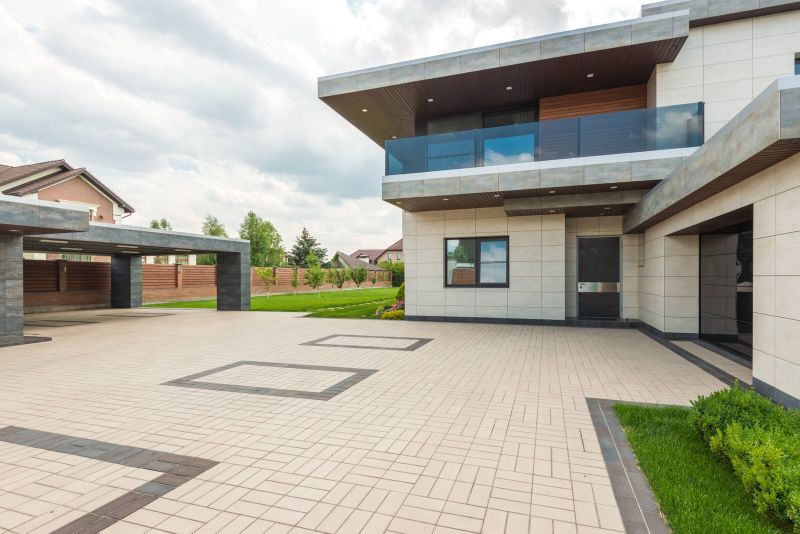
For resale, block paving tends to add slightly more perceived value thanks to its finish, which can matter on Newton Abbot's competitive market-town streets. Tarmac delivers better value per pound spent if raw function is the goal. Neither is a wrong choice - it comes down to what you want the drive to do and how it should look while doing it.
Whichever you choose, the installer matters more than the material. Checking a firm through the TrustMark scheme for vetted tradespeople is a sensible step before you sign anything.
Which One Wins?
There's no universal winner - there's a winner for your situation. Choose tarmac if budget is the priority, you want minimal day-to-day upkeep, or you have a long sloping run to surface. Choose block paving if kerb appeal matters, you want permeable drainage without a planning application, or you value being able to lift and relay sections down the line.
For many Newton Abbot homeowners it comes down to a simple question: are you buying a surface or a feature? If you're weighing tarmac against resin instead, our tarmac vs resin comparison for Newton Abbot covers that pairing in the same detail.
Want to learn more about tarmac vs block paving driveways in Newton Abbot? Click here to contact us.
---
FAQ
Q: Is tarmac or block paving cheaper in Newton Abbot?
A: Tarmac is cheaper. It typically costs £45-£65 per square metre installed against £60-£100 for block paving. On a 40m² drive that's roughly a £1,000-£1,500 difference before groundwork, mainly because tarmac is laid and rolled in a day or two while block paving is set by hand over several days.
Q: Which lasts longer, tarmac or block paving?
A: Both last a long time when laid on a proper sub-base. A two-coat tarmac drive gives around 20-30 years, and block paving 20-40 years. Block paving often reaches the higher end because damaged sections can be lifted and relaid rather than resurfacing the whole drive.
Q: Do I need planning permission for a tarmac or block paving driveway in Newton Abbot?
A: For a front-garden drive over 5m², an impermeable surface needs either permission from Teignbridge District Council or a drainage solution keeping runoff off the highway. Tarmac usually uses a channel drain for this. Permeable block paving avoids the requirement altogether by letting water soak through.
Q: Which handles a sloped Newton Abbot driveway better?
A: Tarmac has an edge on a steep, continuous slope because it's laid as one seamless surface with no joints to shift. Block paving works on slopes too but needs firm edge restraints and careful base preparation to stop blocks creeping over the years.
---
You might also like
West County Driveways