Planning a Driveway Around an EV Charger in Newton Abbot and South Devon
Most people in Newton Abbot who buy an electric car end up doing things in the wrong order. They get the driveway done one year, buy the car the next, and then pay an electrician to cut a trench through a surface that is barely broken in. It doesn't need to go that way. A length of plastic ducting laid in the open trench while the groundworks are happening typically adds £150 to £400 to a driveway job. Doing the same run after the surface is down can easily cost three or four times that, and on resin you will usually see the repair line for years. Around Teignbridge the problem is sharper than in most of the country: plots are steep, a lot of the older housing is terraced with no off-street parking at all, and the Newton Abbot area gets roughly 900 to 1,000mm of rain a year, with the Dartmoor-edge towns such as Ashburton well above that. Here is how to plan the driveway and the charger together.
Why the EV Charger Belongs in the Driveway Quote
A home charger is an electrical job, and the driveway is a groundworks job. That's why they get planned separately, even though the two share the same few square metres. The electrician wants the shortest safe cable route from your consumer unit to the charger. The driveway installer wants a level, well-drained bay with a sub-base that won't sink. If nobody talks to anybody, you get a charger bolted to the wrong wall and a cable run that has to cross the new surface.
Getting both trades onto the same plan takes one conversation at the survey stage. When we price a driveway at West County Driveways, we ask whether an EV is likely in the next five years, because roughly one in three new-car registrations in the UK is now either fully electric or a plug-in hybrid, and most driveways we lay will outlast at least two cars. Even if you have no plans yet, a spare duct costs very little.
Cable Ducting Under the New Surface
The simplest version is a single run of 50mm to 100mm twin-wall ducting, laid below the sub-base from the point where the cable leaves the house to wherever the charger or a future post might go. A draw cord is left inside so the electrician can pull the armoured cable through later without lifting anything. Cable under a vehicle area is typically buried around 450mm to 600mm deep with warning tape above it, which is deeper than the 150mm to 250mm dig for a normal driveway sub-base, so the trench is cut as a separate step during excavation.

Ask for sealed ends, a second duct if you might want a charger on a post later (typically £3 to £6 a metre extra), and a photo of the open trench with a tape measure in shot for your house file.
Build-Time Ducting vs Retrofit: Typical Costs
Guide figures for South Devon in 2026, not quotes:
- A 10m duct run with draw cord laid during the build: £150 to £300.
- The same run retrofitted afterwards: £500 to £1,200 in total.
- Cutting and reinstating resin bound: £60 to £120 a metre, and the join often shows.
- Lifting and relaying block paving: £40 to £80 a metre.
- Cutting and patching tarmac: £45 to £90 a metre.
The charger itself is a separate cost. A standard 7kW home unit typically comes in at £800 to £1,200 fitted, with longer cable runs adding something like £15 to £30 a metre for armoured cable.
Charger Position, Parking Bays and South Devon Slopes
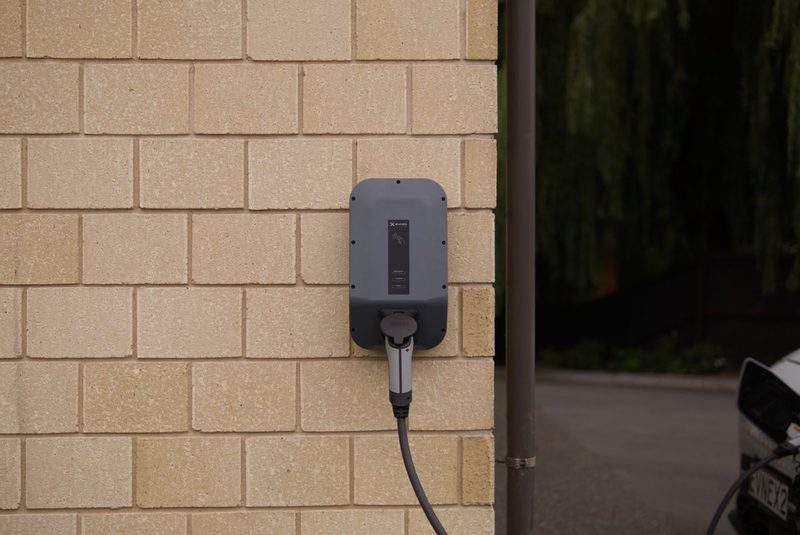
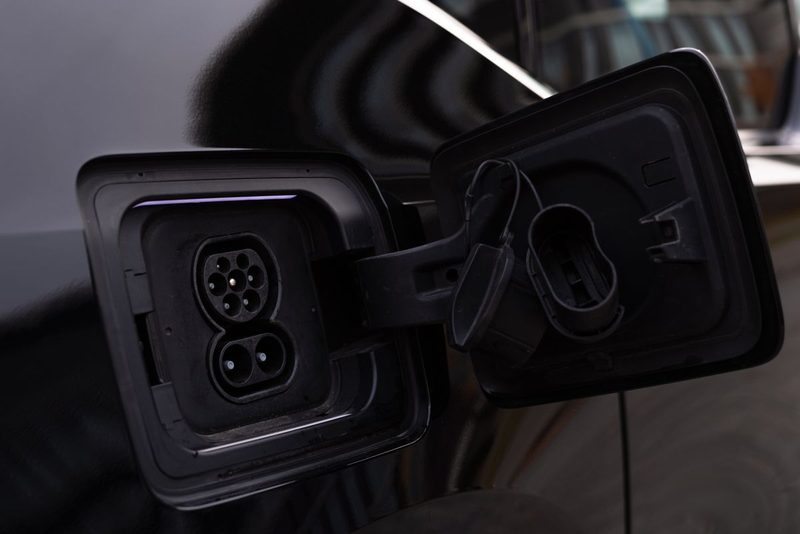
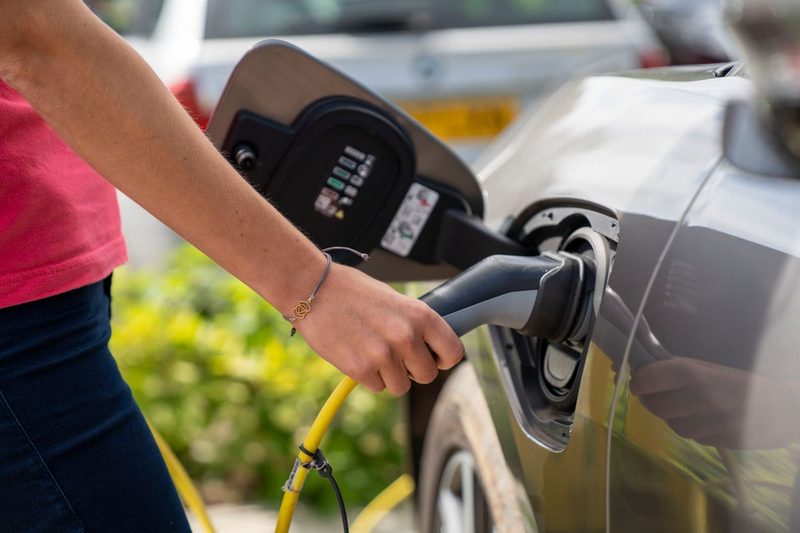
Tethered chargers usually come with a 5m or 7.5m cable. That sounds generous until you realise the charging port could be on the front wing, the rear quarter, or either side, depending on the car. The safest layout puts the charger close to the end of the bay where the port is most likely to be, mounted roughly 0.75m to 1.2m off the ground, with the cable able to reach without crossing a path or lying across a step.

Slope is the local complication. A lot of plots around Highweek, Wolborough and the hillier streets of Kingsteignton, Teignmouth and Brixham fall several metres from road to front door. On a steep drive, cars tend to be parked nose-in, and the charging cable ends up lying downhill. Put the charger towards the top of the slope where you can, so the cable and plug aren't sitting in the path of surface water running down the drive. It's also worth creating a flatter bay of about 5m by 2.7m at the charging end if the ground allows, even if the rest of the drive stays steep.
Resin, Block Paving or Tarmac Around a Home Charger
Resin bound
Resin bound is permeable, so rain goes straight through to the sub-base instead of pooling where you stand to plug in. But resin is the hardest surface to cut and repair invisibly. Stone batches and UV exposure vary, and a patch laid three years after the original is rarely a perfect match. If you're choosing resin, the duct really has to go in first.
Block paving
Block paving is the most forgiving for a retrofit, because blocks can be lifted along a line and relaid over a new trench. On a sloping Devon drive it also gives good grip in the wet. Standard block paving on a sand bed isn't treated as fully permeable, although permeable block systems are available if drainage is a concern.
Tarmac
Tarmac is the cheapest of the three per square metre and copes well with the weight of an EV, which can be 300kg to 500kg heavier than a similar petrol car. But it is impermeable, so a tarmac charging bay needs proper falls, typically around 1:60, towards a channel drain or a planted area.
Drainage Around the Charger Bay in Devon's Wet Climate
Home chargers are usually rated IP54 or IP65, so rain on the unit is fine. The trouble is at ground level: connectors dropped in puddles, cables lying in runoff, and you standing in a pond every winter evening to plug in. South Devon's wet season runs longer than the English average, and on the Dartmoor side of the district, around Ashburton and Bovey, annual rainfall typically runs well above 1,200mm.
So the bay under the charger should shed water away from the house and away from the plug-in spot. With resin that happens by default. With tarmac or conventional block paving, it means a fall towards a linear drain or soakaway within your own boundary. Paving more than 5 square metres of front garden in an impermeable surface without that kind of drainage needs planning permission from Teignbridge District Council, and that's a rule we see ignored more than any other.
Dropped Kerbs, Pavements and Terraced Streets Without a Driveway
Two different councils are involved here, and people often mix them up. Teignbridge District Council is the planning authority for Newton Abbot, Kingsteignton, Teignmouth and Ashburton. Devon County Council is the highways authority, which means it owns the pavement and decides on dropped kerbs.
If your new driveway needs a dropped kerb, Devon County Council's vehicle crossing application page sets out the current figures: a £568 licence, construction typically £1,500 to £3,000, and a parking space at least 5m deep and 2.7m wide. We covered the process step by step in our guide to dropped kerbs and vehicle crossings in Newton Abbot.
The 5m depth is where many terraces fall down. Plenty of Victorian and Edwardian houses in Newton Abbot, Teignmouth and Totnes have front yards of 2m to 3m, so a crossing simply isn't possible. Trailing a charging cable across the pavement isn't an option either. Devon County Council does not support it, and placing a cable across a highway in a way likely to cause danger can be an offence under section 162 of the Highways Act 1980. Devon and Torbay did run a trial of cable channels cut into the footway, but that trial has now closed, and the council expects applications to reopen from early 2027.
Planning Rules and the OZEV Chargepoint Grant in 2026
A wall-mounted charger in an area lawfully used for off-street parking is normally permitted development, as long as the unit and its casing are no bigger than 0.2 cubic metres and the house isn't listed or within a scheduled monument. The old rule stopping chargers facing a road within 2m of the highway was removed in May 2025. The Planning Portal's guidance on permitted development for EV chargers covers wall units and post-mounted chargers separately.
The government grant is narrower than most people expect. According to GOV.UK's guidance on electric vehicle chargepoint grants, from 1 April 2026 the grant is up to £500 per socket, and it runs until 31 March 2027. For homes, it covers people who own and live in a flat, or who rent, and who have private off-street parking. There is a separate grant for households with only on-street parking, but that one requires a cross-pavement solution such as a charging gully. If you own and live in a house, you can't claim, and you must not have the charger installed until OZEV confirms you're eligible.
OZEV-authorised electricians are busy out towards Dartmouth and the South Hams, so book yours alongside the driveway, not after it.
Common Questions About EV-Ready Driveways in Newton Abbot
Should I lay EV cable ducting even if I don't own an electric car yet?

Yes, if the driveway is being dug up anyway. A spare duct with a draw cord typically adds £150 to £400 during the build, while retrofitting it through a finished resin, tarmac or block surface usually costs several times that.
Can I run a charging cable across the pavement in Newton Abbot?
No. Devon County Council, the highways authority, does not support cables across the footway, and a cable placed across a highway in a way likely to cause danger can be an offence under the Highways Act 1980. A council cable channel trial has concluded, with applications expected to reopen from early 2027.
Do I need planning permission for a home EV charger in Teignbridge?
Usually not. A wall-mounted charger no larger than 0.2 cubic metres in an off-street parking area is normally permitted development. Listed buildings and scheduled monuments are excluded, so check with Teignbridge District Council if either applies.
Can I get a government grant for a home charger in 2026?
Only in some cases. The OZEV grant of up to £500 runs until 31 March 2027 for people who own and live in a flat or who rent, with private off-street parking. Homeowners living in a house can't claim.
You might also like
West County Driveways