Tarmac Driveway Drainage in Newton Abbot: Soakaways, Falls, and the Rules
Drainage is the single most important thing about a tarmac driveway in Newton Abbot, and it's the part homeowners think about least. Tarmac is a solid, non-porous surface, so every drop of rain that lands on it has to go somewhere - and in the Teign Valley that's a lot of rain, comfortably over 1,000mm a year, roughly 20-30% above the England average. Get the drainage wrong and you'll see standing water, a surface that fails years early, and potentially a fine for breaching planning rules. Get it right and the same drive shrugs off Devon's wettest winter without a puddle. There are three things to plan for: the fall across the surface (usually a gradient of 1-in-40 to 1-in-60), where the water ends up (often a soakaway costing £600-£2,000), and the planning rules on surface water that apply to any new drive. This guide covers all three.
Why Drainage Matters So Much in Newton Abbot
Newton Abbot sits low in the Teign Valley on ground that drains poorly. A large share of local properties sit on clay-heavy subsoils that barely let water through, so rain that isn't actively channelled away tends to pool and linger. Combine that with well over 1,000mm of annual rainfall and a genuinely damp valley-floor micro-climate, and you have a setting where drainage isn't an optional extra - it's the difference between a drive that lasts and one that doesn't.
Standing water is tarmac's enemy. It seeps into any hairline crack, sits against the bitumen, and freezes on the occasional cold snap, loosening the aggregate and setting off the expand-and-contract cycle that turns small faults into big ones. A drive that ponds after every shower can shave years off a surface that should comfortably last two decades.
If you're planning a new drive or trying to fix one that floods, it's worth getting a local eye on the ground first. The team at West County Driveways works across Newton Abbot and Teignbridge and can assess your subsoil, slope and existing drainage before any tarmac goes down - which is the stage where drainage problems are cheapest to solve.
Getting the Falls Right
"Falls" is the trade word for the gentle slope built into a driveway so water runs off in the direction you want rather than sitting in the middle. For tarmac, the standard is a gradient of around 1-in-40 to 1-in-60 - that's roughly 17mm to 25mm of drop per metre. Too flat and water lingers; too steep and it runs off too fast or looks awkward against the house.
The direction of the fall matters as much as the amount. Water must always be directed away from the house and any garage or outbuilding, never toward them, and never toward a neighbour's boundary where it could cause a dispute. On the many sloped, Dartmoor-edge plots around Newton Abbot, natural ground slope helps here, but it also has to be managed so water doesn't sheet straight down onto a road or footpath. We cover the extra considerations for gradient sites in our guide to tarmac driveways on sloped sites in Newton Abbot.
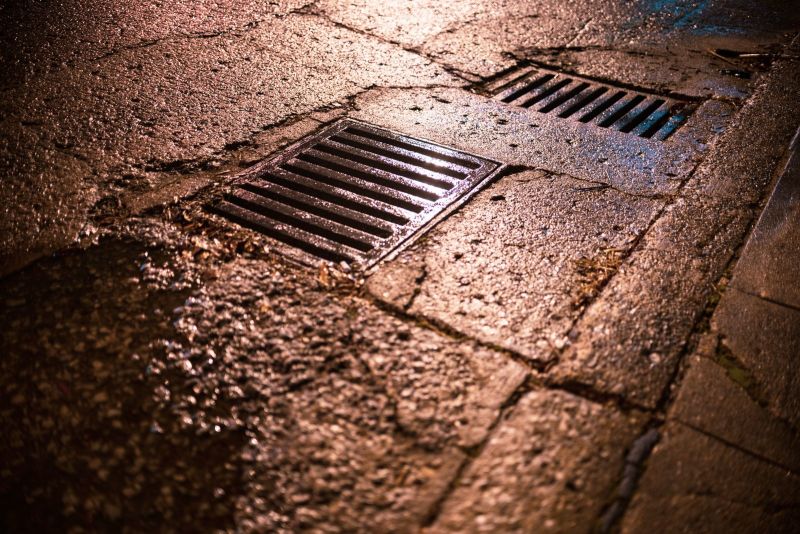
On a flat frontage, or where the fall alone can't carry the volume, a linear channel drain (an ACO-style slot drain across the drive) collects the run-off and pipes it to a soakaway or the surface-water system. Channel drains run roughly £40-£80 per metre supplied and fitted, and on a standard drive you might need three to five metres of it.
Soakaways: Where the Water Actually Goes
A soakaway is a large pit, filled with rubble or purpose-made crates and wrapped in geotextile, that collects run-off and lets it slowly seep into the ground. For a non-porous tarmac drive in Newton Abbot, a soakaway is the most common way to deal with surface water on your own land rather than piping it into the public sewer, which water companies increasingly discourage.
Cost depends on size and how easy the ground is to dig. A modest domestic soakaway typically runs £600-£1,200, while a larger one sized for a big drive on poor-draining clay can reach £1,500-£2,000 once you factor in excavation, crates, and cart-away of spoil. That clay subsoil common around Newton Abbot is the catch - the poorer the natural drainage, the bigger the soakaway has to be to cope, so local ground conditions push these costs toward the upper end more often than not.
The Percolation Test
Before a soakaway is sized, a proper installer should run a percolation (or "perc") test - digging a test hole, filling it with water, and timing how fast it drains. On free-draining ground a small soakaway will do; on Newton Abbot's heavier clay the test often shows slow drainage, meaning either a larger soakaway or, in the worst cases, a different strategy such as directing water to a permeable border. Skipping this test is a common cause of soakaways that overflow in their first wet winter.
The Planning Rules on Surface Water
This is the part that catches people out. Since 2008, you do not automatically have permitted development rights to lay an impermeable driveway that drains onto the road. If you cover more than five square metres of front garden with a non-porous surface like standard tarmac, you need to either drain the water to a permeable area within your own property (such as a soakaway or a border) or apply for planning permission.
The government's own guidance, the planning rules on permeable surfacing of front gardens, sets this out clearly, and the Planning Portal's guidance on paving your front garden is a useful plain-English summary. In practice, a tarmac drive in Newton Abbot is perfectly legal without planning permission as long as the run-off is managed on your own land - which is exactly what a soakaway or channel-drain-to-soakaway setup achieves. It's only draining onto the public highway that triggers the need for permission.
These are part of the wider push toward Sustainable Drainage Systems (SuDS), which aim to reduce the surface-water flooding that a town on a river floodplain like Newton Abbot is genuinely exposed to. A well-drained drive isn't just protecting your own tarmac - it's keeping water out of the storm system during heavy rain.
Permeable Alternatives and When They Make Sense
If you'd rather sidestep the soakaway-and-planning question entirely, a permeable surface is the alternative. Porous asphalt, permeable block paving, or resin-bound gravel all let water drain straight through the surface into a sub-base reservoir below, which removes the need for falls to a soakaway and keeps you clearly inside permitted development rights.
The trade-off is cost. Permeable options generally run higher than standard tarmac's £45-£65 per square metre - permeable block paving and resin-bound systems often land in the £80-£120 per square metre range - so you're paying more upfront to avoid the drainage engineering. On heavy clay, a permeable surface still needs a properly designed sub-base to hold and release the water, so it isn't a magic fix on poor-draining ground either.
For most Newton Abbot homeowners set on tarmac, the sensible route is standard tarmac with well-designed falls and a correctly sized soakaway. It keeps costs down, satisfies the planning rules, and copes with South Devon's rain - provided the drainage is designed properly at the outset rather than bolted on after the drive already floods.
Getting Drainage Designed Properly From the Start
Almost every drainage problem on a tarmac drive traces back to a decision made before the first load of tarmac arrived - too flat a fall, an undersized soakaway, or no percolation test on clay ground. Fixing it afterwards means lifting sections of a finished drive, which is far more expensive than getting it right first time. So the questions to ask any installer are about the ground and the water, not just the price per metre.
Look for a firm that will visit, check your subsoil, and explain exactly where your water will go and how they've sized for it. Ask whether they'll run a percolation test, what fall they're building in, and whether their plan keeps you inside permitted development. Checking a contractor is registered with a scheme like TrustMark, the government-endorsed quality register, is a sensible extra filter before you hand over a deposit. Devon has plenty of driveway contractors, but availability tightens in the drier months when everyone books at once, so plan drainage-heavy jobs early.
If your drive floods, or you're planning a new one and want the drainage designed right from day one, a local assessment of your ground is the best place to start.
---
FAQ
Q: Do I need planning permission for a tarmac driveway in Newton Abbot?
A: Not usually. Since 2008, you can lay a standard tarmac drive without planning permission as long as the surface water drains to a permeable area on your own property - such as a soakaway or border - rather than running onto the public road. If you cover more than five square metres with a non-porous surface that drains onto the highway, you would need permission. A properly designed soakaway keeps you inside permitted development.
Q: What fall should a tarmac driveway have?
A: A tarmac driveway should have a gradient of roughly 1-in-40 to 1-in-60, which is about 17-25mm of drop per metre. The fall must direct water away from the house, garage and any neighbouring boundary. On Newton Abbot's many sloped plots the natural ground slope helps, but it still needs managing so water doesn't sheet onto a road or footpath.
Q: How much does a soakaway cost for a driveway in Newton Abbot?
A: A domestic soakaway typically costs £600-£1,200, rising to £1,500-£2,000 for a larger one on the poor-draining clay subsoils common around Newton Abbot. The cost depends on how much the ground struggles to drain, which is why a percolation test is done first to size it correctly. Skipping that test is a common reason soakaways overflow in their first wet winter.
---
You might also like
West County Driveways